Tool Flow Guide common-breakdowns ticket handling workflow overview

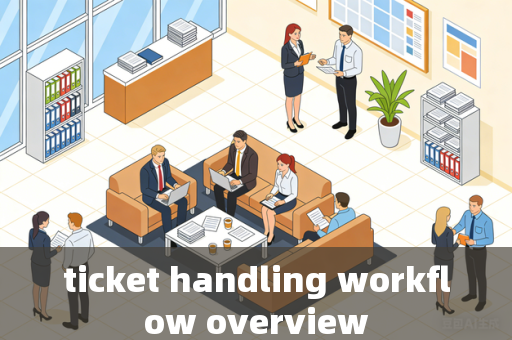
ticket handling workflow overview

Author:toolflowguide Date:2026-02-08 Views:141 Comments:0
Table of Contents
  • High-Level Workflow Summary
  • Detailed Stages Actions
    • A. Ticket Intake Creation
    • B. Triage Categorization
    • C. Prioritization SLA Assignment
    • D. Assignment Ownership
    • E. Work Resolution
    • F. Verification Customer Confirmation
    • G. Closure Documentation
  • Key Principles Best Practices
  • Common Variations by Team Type
  • Sample Tools Enabling This Workflow
  • Visual Workflow Map (Simplified)
  • Here’s a comprehensive overview of a standard ticket handling workflow, commonly used in IT service management (ITSM), customer support, help desks, and issue tracking systems.

    ticket handling workflow overview

    High-Level Workflow Summary

    A ticket moves through a series of stages from creation to resolution, ensuring accountability, prioritization, and timely resolution.

    Ticket Creation → Triage & Categorization → Prioritization → Assignment → Work & Resolution → Verification → Closure

    Detailed Stages & Actions

    A. Ticket Intake & Creation

    • Sources: Email, web form, phone call, chat, self-service portal, automated monitoring.
    • Key info captured:
      • Contact/user details
      • Issue description
      • Category/type (bug, request, question)
      • Urgency (user-perceived impact)
    • Output: Unique ticket ID generated.

    B. Triage & Categorization

    • Initial review: Is ticket valid, duplicate, or spam?
    • Categorization: Assign to correct team/queue (e.g., "Billing," "Technical," "Hardware").
    • Tagging: Add metadata (e.g., "bug," "feature-request," "high-priority").

    C. Prioritization & SLA Assignment

    • Priority matrix (often based on Impact × Urgency):
      • P1/Critical: System down, major functionality broken.
      • P2/High: Significant impact on multiple users.
      • P3/Medium: Minor issue, workaround exists.
      • P4/Low: General inquiry, cosmetic issue.
    • SLA (Service Level Agreement): Set response/resolution time targets based on priority.

    D. Assignment & Ownership

    • Auto-assignment (based on skills, load balancing) or manual assignment to agent/team.
    • Owner takes responsibility for driving resolution.

    E. Work & Resolution

    • Investigation: Gather details, reproduce issue, check logs.
    • Communication: Update ticket, ask user for more info.
    • Solution development: Fix, workaround, or provide answer.
    • Escalation (if needed): To specialist teams, management, or vendors.

    F. Verification & Customer Confirmation

    • Solution delivered to user.
    • User verification: Confirm if issue is resolved.
    • If not resolved: Reopen ticket, loop back to investigation.

    G. Closure & Documentation

    • Resolution notes: Document root cause and solution.
    • Ticket closed after confirmation (or auto-close after no response).
    • Knowledge base: If recurring issue, create/update KB article.
    • Feedback: Send customer satisfaction survey (CSAT).

    Key Principles & Best Practices

    • Clear communication: Keep requester updated on status.
    • SLA adherence: Monitor and meet response/resolution targets.
    • First-contact resolution (FCR): Resolve on first interaction when possible.
    • Use of templates & macros: For common replies to save time.
    • Escalation paths: Defined rules for when and how to escalate.
    • Metrics & reporting: Track KPIs like resolution time, backlog, CSAT.

    Common Variations by Team Type

    Team Workflow Focus
    IT Help Desk Incidents & service requests, heavy on SLAs, escalations to L2/L3.
    Customer Support Emphasis on communication, CSAT, refunds/returns, retention.
    Dev/Engineering Bug/feature tickets, sprint-based workflows, peer review, deployment steps.
    HR/Internal Requests Onboarding, access requests, approvals, confidential handling.

    Sample Tools Enabling This Workflow

    • Ticketing systems: Zendesk, Freshdesk, Jira Service Management, ServiceNow.
    • Internal tools: Jira, Trello, Asana (adapted for tickets).
    • Automation: Auto-assignment, SLA timers, canned responses, escalation rules.

    Visual Workflow Map (Simplified)

    [New Ticket]
         ↓
    [Triage] → Duplicate? → Merge/Close
         ↓
    [Categorize & Tag]
         ↓
    [Set Priority & SLA]
         ↓
    [Assign to Agent/Team]
         ↓
    [Work on Ticket] → Needs Escalation? → Escalate
         ↓
    [Propose Resolution]
         ↓
    [Customer Verifies] → Not fixed? → Reopen
         ↓
    [Close & Document]

    This workflow ensures consistency, accountability, and measurable service delivery. Teams often customize stages to match their specific processes and tools.

    Permalink: https://toolflowguide.com/ticket-handling-workflow-overview.html

    Source:toolflowguide

    Copyright:Unless otherwise noted, all content is original. Please include a link back when reposting.

    Related Posts

    Leave a comment:

    ◎Welcome to take comment to discuss this post.

    • Latest
    • Trending
    • Random
    Featured
    Site Information

    Home · Tools · Insights · Tech · Custom Theme

    Unless otherwise noted, all content is original. For reposting or commercial use, please contact the author and include the source link.

    Powered by Z-BlogPHP · ICP License · Report & suggestions: 119118760@qq.com