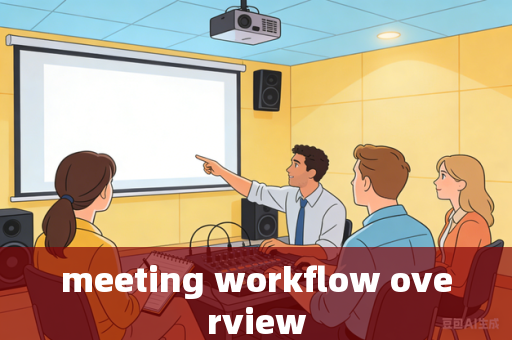
Tool Flow Guide roles meeting workflow overview

meeting workflow overview

Author:toolflowguide Date:2026-02-08 Views:116 Comments:0
Table of Contents
  • Visual Workflow Overview
  • Phase 1: Pre-Meeting (The Foundation)
  • Phase 2: During the Meeting (The Execution)
  • Phase 3: Post-Meeting (The Follow-Through)
  • Key Principles for the Entire Workflow
  • Of course. Here is a comprehensive overview of a modern, effective meeting workflow, broken down into three key phases: Before, During, and After.

    meeting workflow overview

    This workflow is designed to maximize efficiency, ensure clarity, and drive tangible outcomes from every meeting.


    Visual Workflow Overview

    flowchart TD
        A[Identify Need & Goal] --> B{Meeting Required?}
        B -- No --> C[Find Async Alternative<br>e.g., Email, Doc, Chat]
        B -- Yes --> D[Phase 1: Pre-Meeting]
        subgraph D [Pre-Meeting]
            D1[Define Purpose & Agenda]
            D2[Invite Right People<br>Set Time]
            D3[Share Pre-Work & Context]
        end
        D --> E[Phase 2: During Meeting]
        subgraph E [During Meeting]
            E1[Start on Time, State Goal]
            E2[Facilitate & Timebox]
            E3[Assign Action Items & Owners]
            E4[Confirm Decisions & Next Steps]
            E5[End on Time]
        end
        E --> F[Phase 3: Post-Meeting]
        subgraph F [Post-Meeting]
            F1[Distribute Notes & Actions<br>within 24hrs]
            F2[Archive Materials]
            F3[Track Action Completion]
            F4[Follow Up as Needed]
        end
        F --> G{Goal Achieved &<br>Team Aligned?}
        G -- Yes --> H[Meeting Success]
        G -- No --> I[Learn & Improve Process]

    Phase 1: Pre-Meeting (The Foundation)

    This phase determines whether a meeting is even needed and sets it up for success.

    1. Define the Purpose & Goal:

      • Ask: "What specific outcome do we need by the end of this meeting?"
      • Frame it as a goal: "Decide on the Q3 marketing theme," not "Discuss marketing."
      • The "Meeting Check": Can this be resolved via email, a shared document, or a quick chat? If yes, do that instead.
    2. Create a Clear Agenda:

      • List topics as questions to be answered.
      • Assign a time limit to each topic (timeboxing).
      • Identify who is responsible for leading each segment.
      • Example Agenda:
        • Goal: Decide on launch date for Project X.
        • 5 min: Review timeline constraints (led: Dev Manager)
        • 10 min: Discuss marketing dependencies (led: PM)
        • 10 min: Weigh risks & decide on date (led: Team)
        • 5 min: Confirm action items (led: Facilitator)
    3. Invite the Right People:

      • Core Participants: Decision-makers, key contributors, topic experts.
      • Optional / FYI: Share the recording and notes with them afterward.
      • Respect people's time—smaller groups are often more effective.
    4. Schedule & Share Context:

      • Send calendar invites with the Goal and Agenda clearly in the description.
      • Attach or link to any necessary pre-reading materials (reports, data, previous notes).
      • Communicate if preparation is required from attendees.

    Phase 2: During the Meeting (The Execution)

    This is where structure and facilitation ensure productivity.

    1. Start on Time, State the Goal:

      Begin by reiterating the meeting's goal and agenda. This focuses everyone immediately.

    2. Assign Roles (Formally or Informally):

      • Facilitator: Keeps discussion on track and on time.
      • Note-Taker/Scribe: Documents decisions, action items, and key points (using a shared doc).
      • Timekeeper: Helps the facilitator stay on schedule.
    3. Facilitate the Discussion:

      • Follow the agenda. Politely table off-topic conversations for later.
      • Encourage equal participation. Draw out quiet voices.
      • Use visual aids (shared screen, whiteboard) to maintain engagement.
    4. Capture Decisions & Action Items:

      • This is the most critical step. Use a shared document (Google Docs, Confluence, Microsoft Loop) visible to all.
      • Clearly note: What was decided?
      • For every action item, assign: What? Who? By When? (e.g., "Finalize budget spreadsheet - Priya - By Friday EOD").
    5. Confirm Next Steps & End on Time:

      • In the final 2-3 minutes, quickly review the captured decisions and action items.
      • Ensure everyone leaves with the same understanding.
      • Thank attendees and end promptly.

    Phase 3: Post-Meeting (The Follow-Through)

    This phase ensures the meeting creates value and momentum.

    1. Distribute Meeting Notes Promptly (within 24 hours):

      • Send the notes (from the shared doc) to all attendees and key stakeholders who couldn't attend.
      • Structure notes clearly: Goal, Attendees, Decisions, Action Items (with owners & deadlines), Key Discussion Points.
    2. Archive Materials:

      Store the notes, recording, and any presented materials in a shared team repository (e.g., SharePoint, Drive, project folder).

    3. Track Action Items:

      • Move action items into your team's project management tool (Asana, Jira, Monday, Trello) or track them in a central spreadsheet.
      • This prevents them from being forgotten in an email thread.
    4. Follow Up:

      • Owners complete their actions by the deadline.
      • The meeting organizer or project manager checks in on progress before the next related meeting.

    Key Principles for the Entire Workflow

    • Respect is Currency: Respect everyone's time by being prepared, starting/ending on time, and staying focused.
    • Clarity Over Assumption: Be explicit about goals, decisions, and ownership.
    • Document Everything: A meeting without a record of decisions and actions is often a wasted meeting.
    • Continuous Improvement: Periodically ask: "Could this meeting be more effective? Shorter? An email instead?"

    By systematizing your meetings with this workflow, you transform them from time-consuming obligations into powerful engines for alignment, decision-making, and progress.

    Permalink: https://toolflowguide.com/meeting-workflow-overview.html

    Source:toolflowguide

    Copyright:Unless otherwise noted, all content is original. Please include a link back when reposting.

    Related Posts

    Leave a comment:

    ◎Welcome to take comment to discuss this post.

    • Latest
    • Trending
    • Random
    Featured
    Site Information

    Home · Tools · Insights · Tech · Custom Theme

    Unless otherwise noted, all content is original. For reposting or commercial use, please contact the author and include the source link.

    Powered by Z-BlogPHP · ICP License · Report & suggestions: 119118760@qq.com