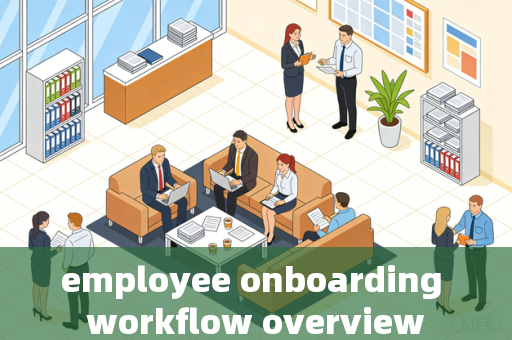
Here’s a comprehensive overview of a modern employee onboarding workflow, structured to ensure a smooth transition for new hires from offer acceptance to full productivity and integration.
Goal of Onboarding:
To engage, integrate, and equip new employees with the tools, knowledge, and relationships they need to become productive, confident, and retained members of the organization.
Typical Onboarding Workflow Timeline & Stages
Stage 1: Pre-Boarding (Offer Acceptance to Day 1)
This stage reduces anxiety and builds excitement.
- Actions:
- Send formal offer letter and contract.
- Complete background checks and other pre-employment formalities.
- New hire completes digital paperwork (I-9, W-4, benefits, policies).
- Set up IT accounts, email, and software access.
- Order hardware (laptop, phone, badge) and ship to employee.
- Send a warm welcome email from the hiring manager/team.
- Share the detailed Day 1 schedule and onboarding agenda.
- Provide access to an onboarding portal or pre-read materials (company handbook, culture deck, org chart).
Stage 2: First Day (Welcome & Foundation)
This day is about making a great first impression and reducing first-day chaos.
- Actions:
- Warm welcome: A designated greeter, welcome kit/swag, decorated workspace.
- Formal introduction to the team and key colleagues.
- IT setup confirmation and initial login assistance.
- Review of Day 1 schedule and onboarding roadmap.
- Initial meetings with HR (brief benefits overview, compliance) and hiring manager.
- Team lunch or virtual coffee.
- Assign a Buddy/Mentor.
Stage 3: First Week (Orientation & Immersion)
Focus on company-wide acclimation and initial role clarity.
- Actions:
- Company Orientation Session: Mission, vision, values, history, structure.
- Compliance & Security Training: Essential policies, safety, data security.
- Tools & Systems Training: Introduction to core software (CRM, project tools, HRIS).
- Role-Specific Kickoff: Deep dive with manager on first 30/60/90 day goals, expectations, and initial projects.
- Schedule introductory meetings with cross-functional partners.
- Begin the first small, meaningful task or contribution.
Stage 4: First 30 Days (Role-Specific Training & Social Integration)
Shift focus to the team, role proficiency, and building networks.
- Actions:
- Structured role-specific training and shadowing.
- Regular (e.g., weekly) 1:1 check-ins with manager for feedback and support.
- Buddy check-ins to answer informal questions.
- Completion of foundational training modules.
- Goal: Complete first independent task or milestone.
- Encourage participation in team and company social events.
Stage 5: First 90 Days (Ramping Up & Contribution)
Goal is to move from learning to contributing and establishing a development path.
- Actions:
- Take on more significant responsibilities within the role.
- 90-Day Review Meeting: Formal feedback session with manager. Discuss what's working, challenges, and adjust goals.
- Solicit feedback from peers and stakeholders.
- Deepen understanding of team and company goals/OKRs.
- Begin to contribute ideas and process improvements.
Stage 6: First Year (Integration & Development)
Focus on long-term growth, belonging, and performance.
- Actions:
- Annual Performance Review Preparation.
- Career development conversation with manager.
- Ongoing mentorship and training opportunities.
- Full integration into company culture and communities (ERGs, social clubs).
- Opportunity to mentor the next wave of new hires.
Key Components of a Successful Workflow:
- Clear Ownership: HR, Hiring Manager, IT, and the Buddy have defined responsibilities.
- Technology & Automation:
- Use an Onboarding Platform (e.g., BambooHR, Workday, Sapling) to automate tasks, track progress, and house documents.
- Digital checklists for each stakeholder.
- Human Connection:
- Buddy/Mentor program.
- Scheduled social interactions.
- Manager engagement is critical.
- Structured & Consistent: Every hire goes through the same core experience, with role-specific customization.
- Feedback Loops:
- New hire surveys at 30, 60, and 90 days.
- Manager feedback on the onboarding process.
Visual Workflow Summary (Simplified):
[Offer Accepted]
        ↓
[Pre-Boarding: Paperwork, IT Setup, Welcome]
        ↓
[Day 1: Warm Welcome, Introductions, Manager Meeting]
        ↓
[Week 1: Company Orientation, Compliance, Tool Training]
        ↓
[First 30 Days: Role Training, Buddy Support, First Tasks]
        ↓
[First 90 Days: Increased Contribution, Formal Review]
        ↓
[First Year: Development, Deep Integration, Mentorship]
Common Pitfalls to Avoid:
- Information Overload: Dumping everything on Day 1.
- Lack of Structure: "Figure it out as you go" approach.
- Neglecting Social Integration: Only focusing on administrative tasks.
- No Manager Involvement: Onboarding is seen as solely HR's job.
- Ignoring Feedback: Not measuring or improving the process.
A well-designed onboarding workflow is a strategic investment that dramatically improves time-to-productivity, employee engagement, and retention. It’s the first and most important chapter in the employee experience story.